
A warm, honest guide for every Class X and XII student — no matter what your marks say.
FIRST THINGS FIRST
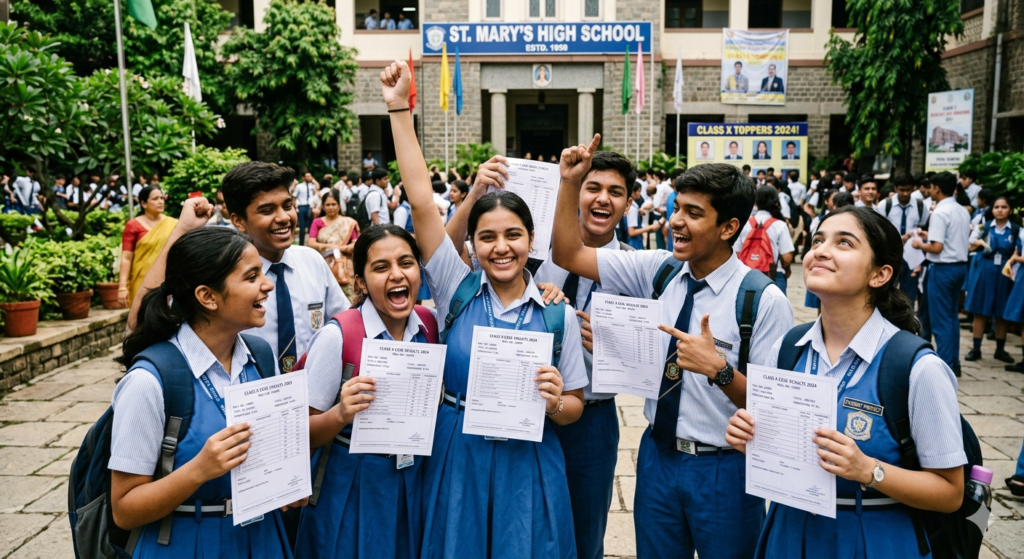
Congratulations. Truly. Now, breathe.
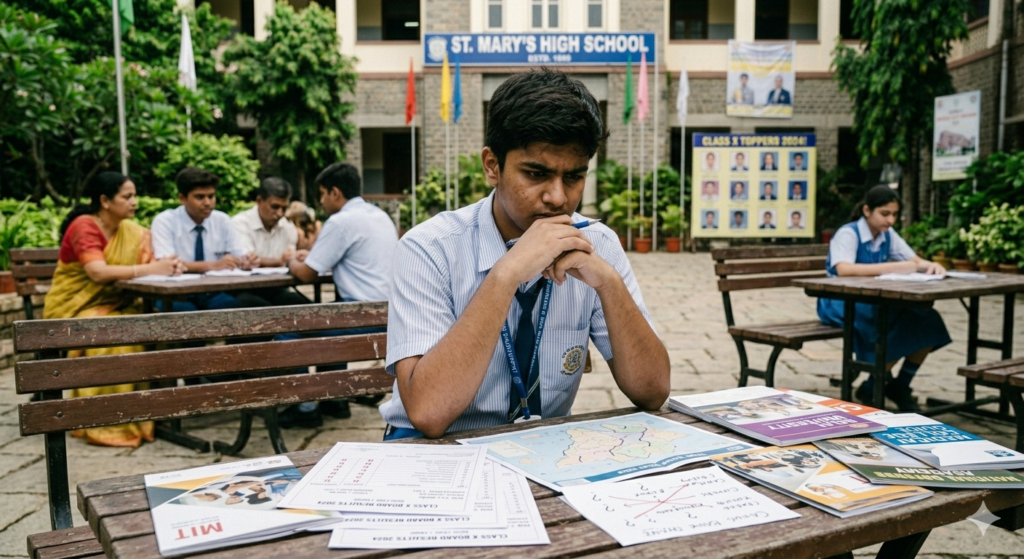
Whether you scored 95% or 55%, you have just cleared one of the most important examinations of your school life. That is no small thing. Millions of students across India sat for the same examinations — from tiny towns in Bihar to busy cities in Karnataka, from missionary schools in Meghalaya to government schools in Rajasthan — and you made it through. Give yourself a moment to feel proud of that.
Now, a familiar wave is about to crash over you: the pressure to “decide your future.” Relatives will ask at every family gathering. Neighbours will compare your marks with their children’s. Social media will show you classmates celebrating medical and engineering admissions.
So before we talk numbers and career paths, let us say this clearly: your marks are one data point, not your destiny. They tell you where the easiest doors are right now. They do not tell you what kind of person you are, or what you are capable of becoming.
| “India needs engineers, yes — but it equally needs chefs, designers, teachers, entrepreneurs, nurses, athletes, content creators, and a thousand other kinds of brilliant, hardworking people.” |
This guide will walk you through your options — honestly, practically, and without judgment. We will start with Class X choices, then move to Class XII, and make sure every student — from the toppers to those who struggled — finds a path worth walking.
AFTER CLASS X
The Big Three: Science, Commerce, or Arts?

When you pass Class X — whether from CBSE, ICSE, or a State Board — the most immediate decision is which stream to take in Classes XI and XII. This choice matters, but it is not irreversible. Many students switch streams. Many career paths are open to students from all three streams.
The Science Stream
Science is the most popular choice — but also the most demanding. If you genuinely enjoy Mathematics, Physics, Biology, or Chemistry — not just to score marks, but because you find them genuinely interesting — then Science may be right for you.
| SCIENCE WITH PCM (PHYSICS, CHEMISTRY, MATHS) |
| Engineering (JEE Main, JEE Advanced, State CETs) |
| Architecture (NATA entrance exam) |
| B.Sc. in Computer Science, Physics, Maths, Statistics |
| Merchant Navy, Defence (NDA exam) |
| Data Science, AI/ML careers — increasingly in demand |
| Pilot training (Aviation) |
| SCIENCE WITH PCB (PHYSICS, CHEMISTRY, BIOLOGY) |
| MBBS / BDS (NEET-UG entrance exam — mandatory) |
| B.Sc. Nursing, Physiotherapy, Occupational Therapy |
| Veterinary Science (BVSc) |
| Pharmacy (B.Pharm) |
| Biotechnology, Microbiology, Genetics |
| Environmental Science, Forestry |
The Commerce Stream
Commerce is no longer the “second choice” stream. In the age of startups, global business, and finance, Commerce students are in tremendous demand. If you enjoy understanding how businesses work, how money moves, or how laws govern companies, Commerce is a rich and rewarding choice.
| COMMERCE OPENS PATHS TO |
| Chartered Accountancy (CA) — one of India’s most prestigious qualifications |
| B.Com, BBA, BMS degrees in business and management |
| Economics Honours — one of the finest subjects for sharp minds |
| Company Secretary (CS), Cost Accountant (CMA) |
| Banking and Finance careers, UPSC Civil Services |
| MBA after graduation — from IIMs and top B-Schools |
| Law (BA LLB integrated programme) |
The Arts / Humanities Stream
The Arts stream is criminally underestimated in India. History, Political Science, Sociology, Psychology, Geography, Literature, Fine Arts — these subjects build critical thinking, communication skills, and empathy that the 21st century economy desperately needs.
| ARTS / HUMANITIES OPENS PATHS TO |
| Civil Services (IAS, IPS, IFS) — India’s most competitive and respected careers |
| Law (LLB, BA LLB, BBA LLB) |
| Journalism, Mass Communication, and Media |
| Psychology, Social Work, Counselling |
| Teaching, Research, Academia |
| Design, Fine Arts, Film, Theatre, Music |
| International Relations, Diplomacy, NGO sector |
| Literature, Writing, Publishing |
CLASS X MARKS GUIDE
What Your Class X Score Tells You — and What It Doesn’t
Different boards assess differently. An 85% in ICSE is often considered equivalent to 90%+ in many State Boards. Keep this context in mind as you read below.
| 90%+ EXCELLENT | All doors are open — choose by interest, not prestige You have the marks to enter any stream at most top schools. The question is not “what can I get?” but “what do I genuinely want?” Resist pressure to choose Science simply because you can. Many students with 90%+ spend two miserable years in Science they dislike, only to end up in Commerce or Arts careers anyway. Have an honest conversation about what subjects you actually find interesting. |
| 75–89% GOOD | Strong options in all streams — a little more strategy needed You are in a very comfortable position. If Science is your interest, go for it. If Maths was not your strength, PCB or Commerce could work very well. Students in this range often do brilliantly in Commerce and Humanities streams, finding more joy and better results when they are not fighting an uphill battle with subjects they dislike. |
| 60–74% AVERAGE | Focused choices will take you far — check subject-wise marks Look at individual subject marks, not just the aggregate. If you scored 80+ in Maths and Science but pulled down your average with a weak language paper, Science remains sound. If Science and Maths were your weaker papers, Commerce or Arts may lead to far better Class XII results. Also consider diploma programmes and polytechnic courses. |
| Below 60% EXPLORE WIDELY | This is not the end — it may be the beginning of the right path Please do not let anyone make you feel like a failure. Your options include: retaking subjects (Class X compartment or improvement exams), choosing Arts or Commerce to rebuild confidence and marks, or enrolling in a vocational programme (ITI, Polytechnic Diploma) which leads directly to jobs and good incomes. The world has many more doors than a mark sheet can show. |
| A NOTE ON ICSE VS CBSE VS STATE BOARD |
| ICSE: comprehensive, application-based questions, builds strong English skills |
| CBSE: nationally uniform, well-aligned with JEE and NEET preparation |
| State Board: varies by state; some are rigorous, others more rote-based |
| All three are valid and respected. No board is universally better for every student. |
| Below 60% REGROUP & RISE | Your board result is one chapter — not the whole story India has thousands of successful people who did not do well in Class XII. Your options: improvement exams (CBSE and most State Boards allow reappearing in subjects), open university degrees (IGNOU offers degrees in hundreds of subjects), skill-based diplomas in IT, Healthcare, Hospitality, Automobile Technology, Electronics. The government’s NSDC offers certified programmes that lead to real employment. Many students who score below 60% go on to start businesses, master trades, and live very fulfilling lives. |
BEYOND DEGREES
The Hidden Goldmine: Vocational and Skill-Based Paths
India has a deep cultural bias toward four-year degrees — but the world is changing. Skill-based careers are increasingly well-paid, respected, and in many cases more secure than generic degree jobs. Here are paths that are widely underrated and worth serious consideration:
Coding & Technology
Full-stack development, app development, cybersecurity — bootcamps and self-learning can lead to starting salaries of ₹4–8 LPA within a year or two. The demand for skilled tech workers in India has never been higher.
Hotel Management
IHM (Institute of Hotel Management) entrances are highly regarded. India’s hospitality sector is booming. A strong IHM graduate can travel the world while earning very well. Openings in food & beverage, front office, events, and resort management are plentiful.
Aviation
Commercial pilot licences, cabin crew training, and airport management are structured, well-paying paths. The Indian aviation market is one of the fastest-growing in the world, creating strong demand for trained professionals.
Design & Fashion
NIFT, NID, Pearl Academy, and Symbiosis offer design programmes. Graphic designers, UI/UX professionals, and fashion designers are in strong demand from companies of all sizes, including startups and global firms.
Media & Content Creation
Video editing, photography, social media management, and content writing are legitimate and growing careers. Start building a portfolio now — your youth is your advantage. Brands, agencies, and media houses are hiring creators actively.
Allied Health Sciences
Physiotherapy, occupational therapy, speech therapy, radiology technician, and medical lab technology all offer stable, meaningful, and growing careers — without the extreme competition of MBBS.
Culinary Arts
Professional chefs and food entrepreneurs are thriving. IHM, Culinary Academy of India, Le Cordon Bleu, and even YouTube — there are many structured and informal paths to a brilliant food career.
ITI & Polytechnic Trades
Electricians, plumbers, CNC operators, auto mechanics, and HVAC technicians — these trades are severely under-supplied in India. A skilled tradesperson earns ₹30,000–70,000 per month, and the best can run their own businesses with excellent incomes.
WHEN THINGS DIDN’T GO TO PLAN
What to Do If the Results Weren’t What You Hoped For

This section is written directly for students sitting with a mark sheet they did not expect — or did not want. You may be feeling heavy right now. That is completely understandable. But let us be practical about your options, because you have more than you may realise.
Immediate Options to Consider
- Re-evaluation / Rechecking: All boards offer this. If you feel your paper was not assessed fairly, apply immediately. The window is short — usually 2–3 weeks after results.
- Improvement examination: CBSE and many State Boards allow students to reappear in subjects. One more year of focused study can transform your result entirely.
- Compartment exam: If you have failed in one or two subjects, you are likely eligible for a compartment exam — a second attempt offered within months.
- Open School (NIOS): NIOS (National Institute of Open Schooling) is a full, government-recognised board. You can complete your Class X or XII on your own timeline.
- Vocational courses: Enrol in an NSDC-certified skill course. Often free or low-cost, they lead to recognised certifications and connect you with employment.
- Talk to someone: Poor exam results and their emotional weight should not be navigated alone. Speak with a school counsellor, trusted teacher, or career guidance professional.
| “A mark sheet opens some doors and closes others. But it cannot close the door you build yourself.” |
BEFORE YOU DECIDE
10 Smart Things to Do Before Choosing Your Next Step
- Research, do not just ask relatives. The information relatives give is often 20 years old. Use official websites, Shiksha.com, Careers360, and connect with students actually in the fields you are considering.
- Separate prestige from fit. IIT is genuinely excellent. So is a well-run polytechnic that trains you in a skill you love. Prestige without passion leads to quiet misery.
- Check individual subject marks, not just the aggregate. A 75% with 88 in Maths and 55 in Biology tells a very different story than 75% across the board.
- Explore before you commit. Most entrance exams allow a year to prepare. Use that time to shadow a professional, read, watch YouTube channels from practitioners, and explore seriously.
- Consider the job market honestly. Some streams are oversupplied with graduates. Ask: what specific skills will I develop, and who hires people with those skills?
- Internships and certificates matter enormously. Whatever you study, make sure undergraduate years include real work experience. Employers increasingly care more about demonstrated skills than marks.
- Don’t pick a stream to avoid a subject. Many students choose Commerce to “escape Maths” — only to find Accountancy equally demanding. Choose toward something, not away from something.
- Talk to at least three people working in the field. LinkedIn and alumni networks work well. Ask: “What do you wish you had known before choosing this career?”
- Mental health is not optional. If you are feeling overwhelmed or hopeless, please reach out: iCall — 9152987821 · Vandrevala Foundation — 1860-2662-345. You are not alone.
- Take one month before deciding. Most admission deadlines are in June–July. A month of calm, informed reflection is worth more than a rushed decision made under pressure.
| KEY ENTRANCE EXAMS CALENDAR (APPROXIMATE) |
| JEE Main — January & April (NTA); register from October onwards |
| NEET-UG — May (NTA); register from February onwards |
| CUET — May–June (NTA); covers most central university admissions |
| CLAT — December (law school consortium) |
| IPMAT — May (IIM Indore/Rohtak for BBA-MBA pathway) |
| NIFT / NID / NATA — February–April; for design aspirants |
| IIMC / MCRC / XIC — April–June; for mass communication aspirants |
A WORD FOR PARENTS
To Every Parent Reading This Alongside Their Child
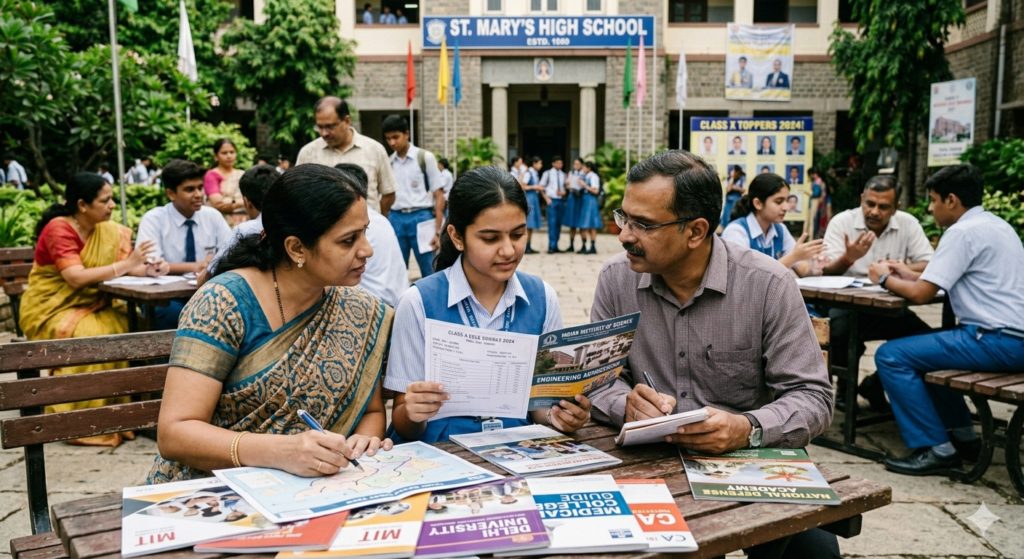
You want the best for your child. That is not in doubt. You have worked hard to give them opportunities you perhaps did not have. The anxiety you feel when you see their mark sheet — whether it is elation or disappointment — comes from love.
But India’s education system has changed. The careers of 2025 are unrecognisable from those of 2000. A child who becomes a skilled UI/UX designer, hotel manager, physiotherapist, data analyst, or content creator can earn well, grow professionally, and live with dignity and purpose — without necessarily clearing JEE or NEET.
| WHAT YOUR CHILD NEEDS FROM YOU RIGHT NOW |
| Permission to choose a path based on interest, not what neighbours’ children are doing |
| One month of calm before making any major decision — give them that gift |
| Trust that a career counsellor may know the current landscape better than family opinions formed a decade ago |
| The message — said clearly and often — that your love is not conditional on their marks |
| Support for mental health: exam stress in India is at crisis levels; if your child seems withdrawn, address that first, career second |
The world does not need one more reluctant engineer or an unwilling doctor. It needs people who love what they do, who are good at it, and who keep getting better. Help your child find that thing — even if it takes a little longer, even if it looks different from what you expected.
DISCLAIMER
This blog post and career guide has been prepared purely for general informational and educational purposes. It is intended to help students and parents explore possible academic and career pathways after Class X and Class XII examinations in India.
Please note the following:
- Not Professional Advice. The information provided here does not constitute professional career counselling, academic advice, or psychological guidance. Readers are strongly encouraged to consult a certified career counsellor, academic advisor, or subject expert before making any important educational or career decision.