Kreation Arts School Annual Arts Examination DATE 11/10/2026 Sunday-from 9AM, Venue-Gurujada Telugu Vidhyapitham, Dhansingh Maidan, Old Settlement.
for securing Better Marks in the Examination By heart all the answers from Below and Practice all the drawing videos of @Kreationarts9
Course Format
- Q: How is the Fifth Year Course evaluated?
- A: The course includes two theory papers (25 marks each) and two practical exams (75 marks each), assessing in-depth art knowledge and applied skills.
Theory — Paper I
- Q1: What is perspective and its types?
- A: Perspective is a method of depicting three-dimensional space on a flat surface to simulate depth and realism. Types include:
- One-point perspective: Lines converge to a single vanishing point; commonly used in road or railway drawings.
- Two-point perspective: Lines converge to two points on the horizon; ideal for architectural drawings.
- Three-point perspective: Adds a third vanishing point (usually vertical); used for tall structures seen from a height or below.
- A: Perspective is a method of depicting three-dimensional space on a flat surface to simulate depth and realism. Types include:

- Q2: Define foreshortening.
- A: Foreshortening is a technique that alters the proportions of a subject so parts closer to the viewer appear shorter. It helps give dynamic depth. For instance, in a reclining figure, the legs may appear shorter than the torso because of the viewing angle.

- Q3: Explain Bengal School of Art.
- A: The Bengal School of Art was a 20th-century Indian art movement that revived traditional Indian painting styles as a form of resistance against colonial aesthetics. Founded by Abanindranath Tagore, it emphasized wash techniques, muted tones, and themes of Indian mythology, spirituality, and nationalism.
- Q4: Explain the following Indian painting styles:
- Tanjore: Originating from Tamil Nadu, it features rich colors, surface richness, and inlay of gold foil with religious icons.
- Madhubani: A folk painting tradition from Bihar known for intricate patterns, bold colors, and spiritual symbols.
- Kalighat: Emerged in 19th-century Kolkata, depicting mythology and everyday life with swift brushwork and flat colors.
- Warli: A tribal art style from Maharashtra using geometric forms to illustrate daily activities and rituals.
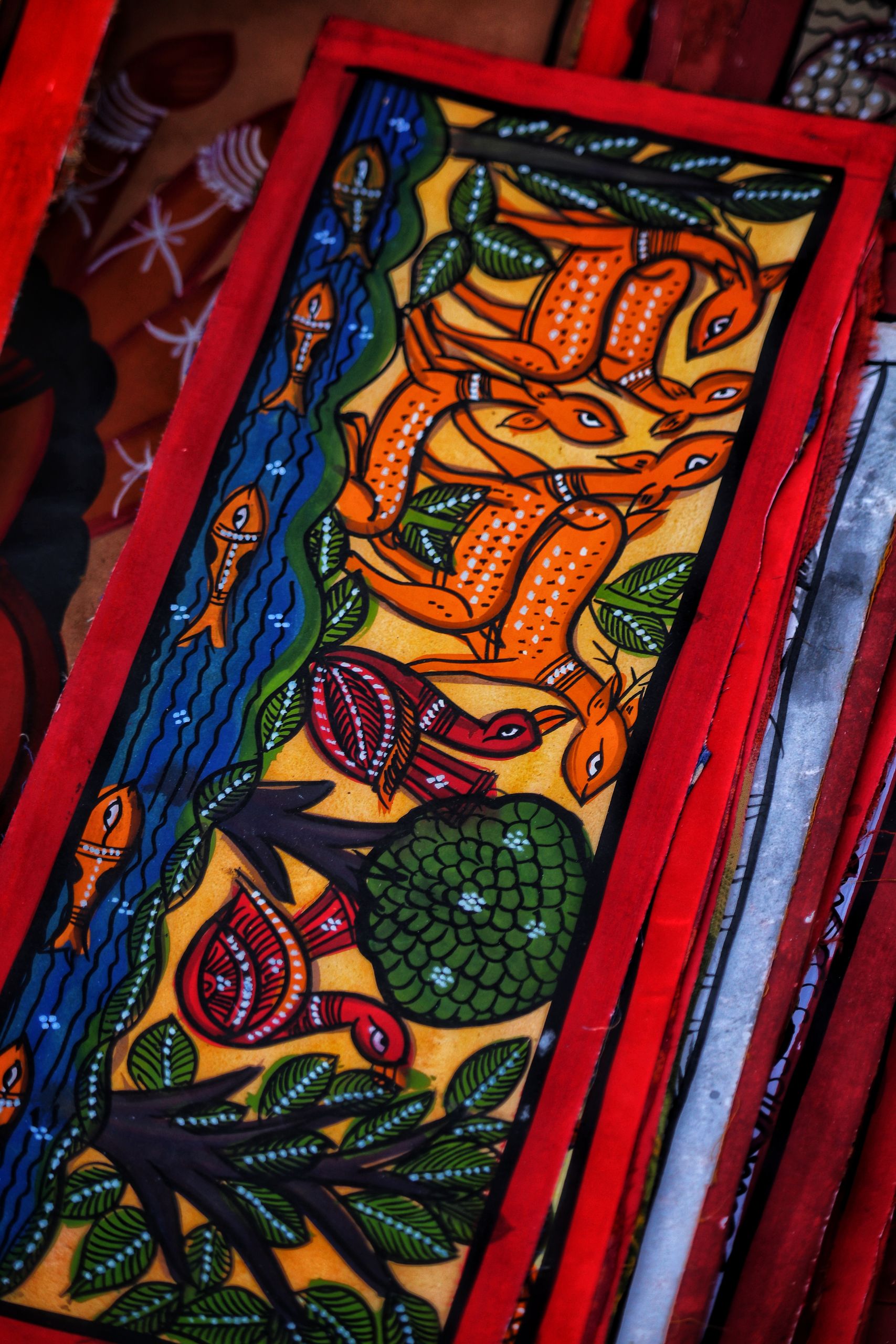
- Pata: An ancient scroll painting style from Odisha and West Bengal, used to narrate mythological stories on palm leaves or cloth.
Theory — Paper II
- Q1: Define the following techniques:
- Engraving: A printmaking method where lines are carved into a metal plate using a sharp tool, then inked and pressed to paper.
- Lithograph: A printing process based on oil-water repulsion. The artist draws on limestone or metal with greasy crayon, then inks and prints it.
- Mosaic: An art form that uses tiny pieces of glass, stone, or tile to create patterns or images, often used in decorative architecture.
- Woodcut: A relief print technique where the image is carved into a wooden block, inked, and transferred onto paper.
- Lino Print: Similar to woodcut but uses a linoleum surface which is softer and easier to carve.
- Batik: A fabric dyeing technique that uses wax-resist methods to create patterns. Wax is applied to areas that should resist dye.
- Etching: Involves covering a metal plate with wax, drawing into the wax, and then using acid to bite into the exposed lines for printing.
- Q2: Write short notes on these Western artists:
- Leonardo da Vinci: A Renaissance master known for his scientific curiosity and iconic works like the Mona Lisa and The Last Supper. He blended art and science brilliantly.
- Michelangelo: An Italian sculptor and painter celebrated for works like the Sistine Chapel ceiling and the statue of David, representing human anatomy and emotion in unmatched detail.
- Raphael: A High Renaissance painter famed for his serene and balanced compositions, notably the “School of Athens” fresco.
- Vincent van Gogh: A Dutch post-impressionist whose expressive brushwork and vivid color use defined masterpieces like Starry Night and Sunflowers.
- Pablo Picasso: A Spanish artist who revolutionized modern art with Cubism, producing a vast body of work across painting, sculpture, and printmaking.
Practical
- Focus on still life, wash techniques, outdoor studies, creative compositions like Mandala art, night scenes, and social themes.
- Medium: Artist Water Colour
Let your child grow through this structured and colorful journey of skill-building and self-expression at Kreation Arts School!