Kreation Arts School Annual Arts Examination DATE 27/07/2025 Sunday-from 10 AM, Venue-Gurujada Telugu Vidhyapitham, Dhansingh Maidan, Old Settlement.
for securing Better Marks in the Examination By heart all the answers from above and Practice all the drawing videos of @Kreationarts9
Course Format
- Q: How is the Fourth Year Course evaluated?
- A: Students are tested through 25 marks in oral theory and 75 marks in practical drawing tasks.
Theory (Oral Evaluation)
- Q1: What is fresco?
- A: Fresco is a technique where pigments are applied to freshly laid wet plaster so the paint becomes part of the wall surface.
- Q2: What is mural?
- A: A mural is a painting created directly on a wall or ceiling that often tells a story or conveys a cultural or political theme.

- Q3: What is Egyptian painting?
- A: Egyptian painting is a style from ancient Egypt that used profile figures, symbolic colours, and religious themes in tombs and temples.
- Q4: What is Greek painting?
- A: Greek painting from antiquity showcased realism, proportion, and mythological subjects, often on pottery and murals.
- Q5: What is Byzantine painting?
- A: Byzantine painting was a medieval Christian style featuring gold backgrounds, stylized figures, and sacred symbolism.

- Q6: Write short notes on Mandala art.
- A: Mandala art uses intricate geometric patterns arranged in circles and is used in spiritual rituals to represent the cosmos or inner peace.
- Q7: What do you know about Warli painting?
- A: Warli painting is a tribal art from Maharashtra made with white pigment on mud walls, depicting daily life using simple lines and shapes.
- Q8: What is the theory of perspective?
- A: The theory of perspective involves rules and techniques used to depict space and volume realistically in two-dimensional art.

- Q9: Define vanishing point.
- A: A vanishing point is where parallel lines seem to meet at the horizon. It’s essential for constructing depth in perspective drawings.
Practical
- Drawing antique objects, still life with reflection (glass/metal), and outdoor studies with observational focus.
- Medium: Artist Water Colour
7th year Course
Paper I – Theory
1) Explain the History of Indian Art.
The history of Indian art is a vast and vibrant journey that mirrors the evolution of Indian civilization itself. It begins from prehistoric times with cave paintings in Bhimbetka, dating back over 30,000 years, where early humans used natural pigments to depict animals and hunting scenes.
From there, Indian art flourished through:
- Indus Valley Civilization (2500 BCE): Known for its terracotta figurines, seals, and advanced urban planning.
- Maurya and Gupta Periods: The rise of stone sculpture and Buddhist art—famous examples include the Ashokan Pillars and Ajanta cave murals.
- Medieval Era: Dominated by temple architecture and sculpture—e.g., Khajuraho, Ellora, and Chola bronzes.
- Mughal Period: A fusion of Persian and Indian styles, seen in miniatures and architecture like the Taj Mahal.
- Modern Era: Marked by colonial influence, Bengal School revival, and contemporary forms post-Independence.
Indian art has always been spiritual, symbolic, and deeply connected to daily life and religion, evolving continuously across ages and dynasties.
2) Explain the Artwork of Bengal School of Art.
The Bengal School of Art emerged in the early 20th century as a nationalist movement to revive Indian art by breaking away from Western academic realism.
Key features:
- Emphasis on Indian themes, particularly mythology, spirituality, and rural life.
- Use of wash technique—delicate, flowing lines and muted colours.
- Inspired by Ajanta murals, Mughal miniatures, and Japanese art.
- Avoidance of realism in favour of idealism and emotion.
Important artists: Abanindranath Tagore (founder), Nandalal Bose, Asit Haldar.
Their goal was to restore Indian identity in art and challenge colonial aesthetics. It laid the foundation for modern Indian art and inspired a cultural renaissance.
3) Explain Western Influence in Indian Art.
Western influence began during British colonial rule, particularly with the establishment of art schools in Madras, Bombay, and Calcutta in the mid-19th century.
Key influences:
- Realistic techniques: Shading, perspective, and anatomical correctness.
- Oil painting: Replaced traditional tempera and natural pigments.
- Academic style: Emphasis on portraiture and realism, often copying European models.
- Printmaking and photography: Introduced new ways of reproducing images.
Artists like Raja Ravi Varma adopted these methods but used them to depict Indian mythology, making his work a bridge between Indian tradition and Western technique.
4) Explain Indian Art in the Renaissance Period.
The Indian Renaissance in art refers to the cultural revival during the late 19th and early 20th centuries.
Key developments:
- Artists began reinterpreting Indian heritage with a modern sensibility.
- Raja Ravi Varma painted Indian gods and goddesses using Western techniques.
- The Bengal School sought a spiritual, Indian-centric aesthetic.
- Art became a means of national identity and pride, influenced by the freedom movement.
This period brought intellectual awakening and laid the foundations of modern Indian art by combining tradition with innovation.
5) Explain the Main Law of Perspective.
Perspective in art is the method of depicting three-dimensional depth on a two-dimensional surface.
Main Law – Linear Perspective:
- All parallel lines appear to converge at a point on the horizon known as the vanishing point.
- The horizon line represents the viewer’s eye level.
- Objects closer to the viewer appear larger, and those farther appear smaller.
This rule creates realistic depth, helping the artist depict distance and space accurately.
6) Explain the Artwork of Ajanta.
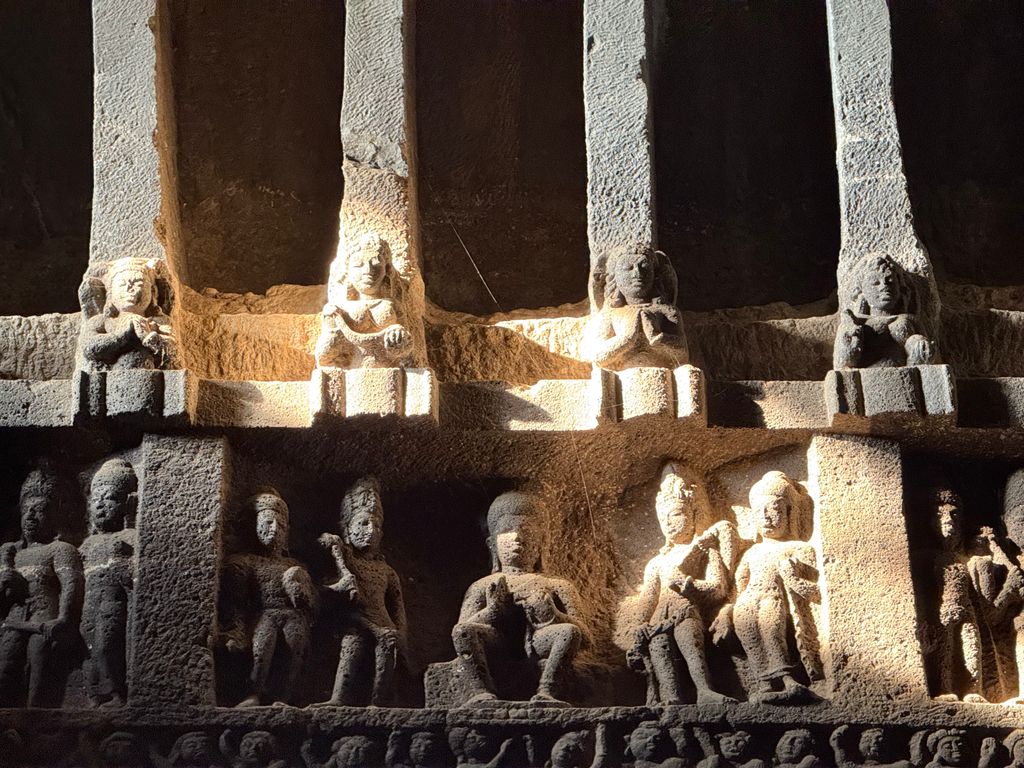
The Ajanta Caves (2nd century BCE to 6th century CE), located in Maharashtra, house some of the finest examples of Indian mural painting.
Features:
- Depictions of Jataka tales—stories of Buddha’s previous lives.
- Use of natural pigments and dry fresco technique.
- Themes of compassion, virtue, and spiritual journey.
- Graceful figures, expressive eyes, and rhythmic compositions.
Ajanta art is known for its lyrical beauty, flowing lines, and masterful portrayal of emotion and gesture.
Paper I – Practical
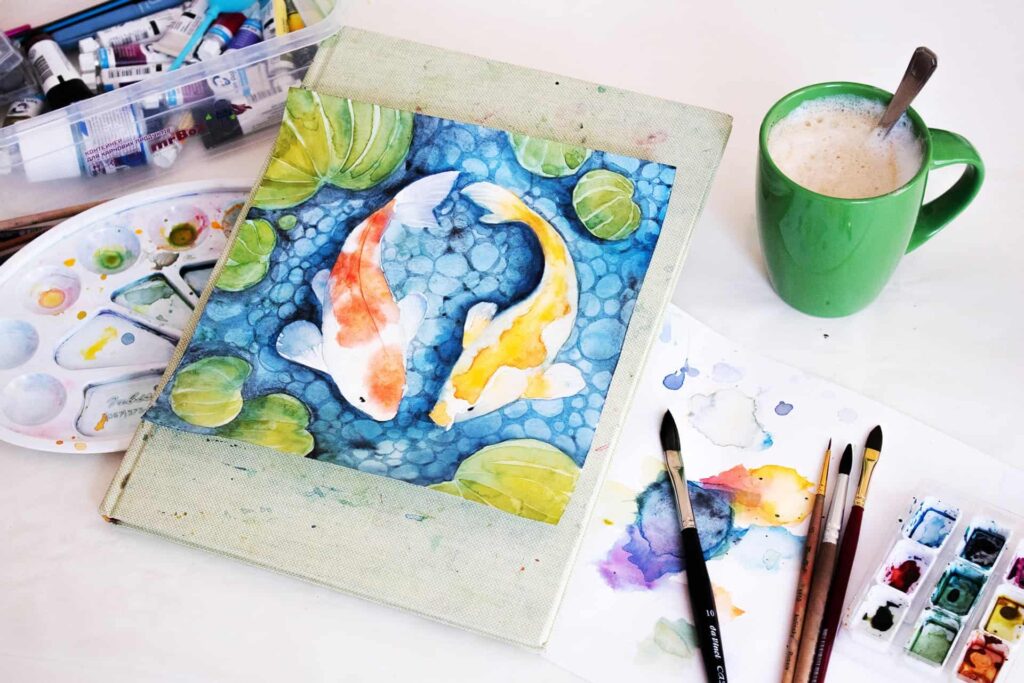
Composition Themes (Using Artist Water Colours):
- Evening Time with Light & Shadow
- Show the warm golden light of sunset.
- Contrast long shadows from trees or people.
- Use yellow, orange, purple tones with soft blending.
- Public Awareness Poster with Slogan
- Example: “Save Water, Secure Future”
- Clear visual: Tap, water drops, Earth in a drop, etc.
- Bold fonts, limited colours, high visibility.
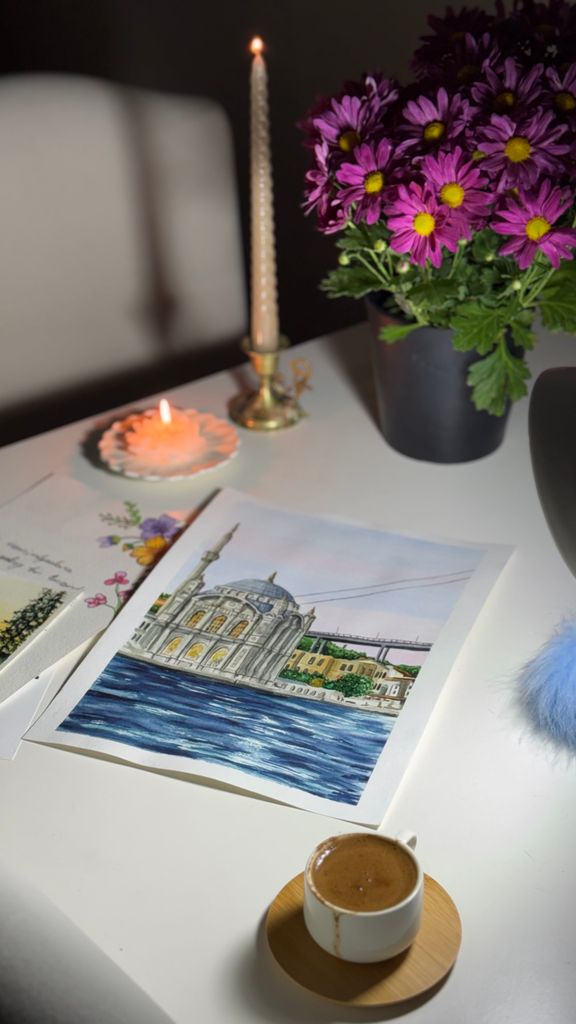
- Your Favourite Tourist Spot
- Choose a personal or iconic location: Taj Mahal, Kerala backwaters, Puri Beach, etc.
- Emphasize beauty, local culture, atmosphere.
Paper II – Theory
Explain the Artwork of the Following Indian Painters:
- Rabindranath Tagore
- Began painting in his 60s.
- Abstract, emotional, symbolic.
- Bold brushwork, free-flowing forms.
- Gaganendranath Tagore
- Satirical and modernist.
- Pioneer of cubism in Indian art.
- Black-and-white ink drawings and caricatures.
- Jamini Roy
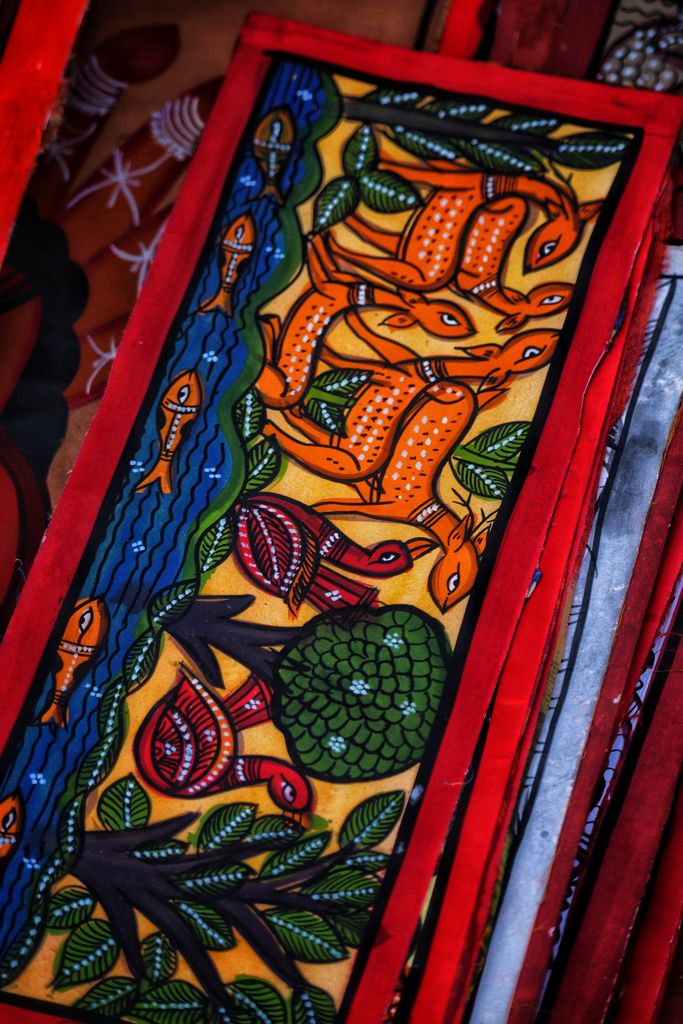
- Folk-inspired, especially Bengal patachitra.
- Bold lines, flat colours, stylized figures.
- Depicted village life and epics.
- Raja Ravi Varma
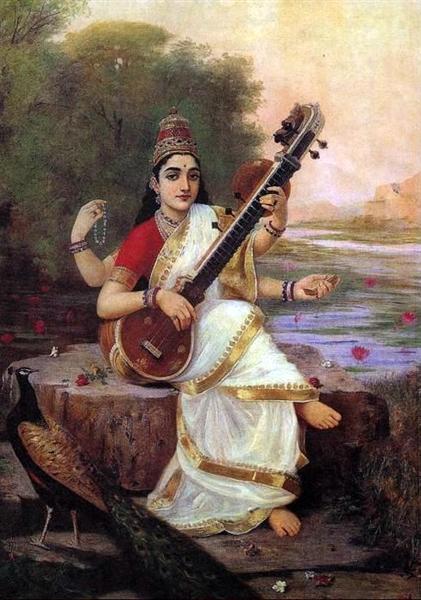
- Combined Indian themes with Western realism.
- Famous for mythological paintings.
- Popularised calendar art—e.g., Lakshmi, Saraswati.
- Abanindranath Tagore
- Founder of Bengal School.
- Developed “Indian style” of painting.
- Famous for works like “Bharat Mata.”
- Nandalal Bose
- Student of Abanindranath.
- Painted rural India, mythology, Gandhi’s life.
- Part of India’s freedom art movement.
Paper II – Practical
Practice Requirements:
- Revise drawing styles of 4th & 5th Year, including:
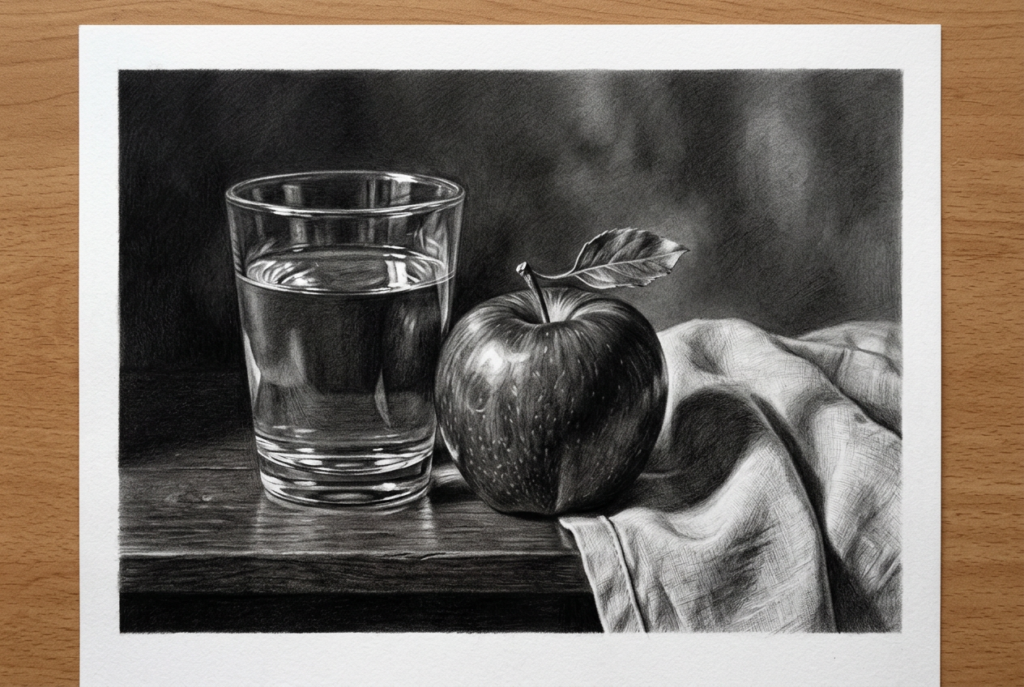
- Still life arrangements (bottle, fruit, fabric)
- Human figures with accurate proportions
- Use charcoal for depth and highlights
Composition Task:
Draw a Face of Any Famous Person Using Light & Shadow
- Use charcoal or sketching pencil
- Focus on:
- Light direction
- Facial planes and anatomy
- Expressive shading
Example subjects: Mahatma Gandhi, Mother Teresa, Swami Vivekananda, A.P.J. Abdul Kalam